
From Stress to Strength: Transformations with a Therapist in Fairfax, VA
Originally Published May 28, 2026

Your life is busy. Scratch that. Busy is an understatement: your life is barely controlled chaos. You feel like you could work for Cirque du Soleil with the amount of juggling you do!
Between work stress, family responsibilities, and the obligations of everyday life as a grown woman in the Western world, you feel guilty even thinking about what you might need. Who has time for that kind of thing?
The thing is, if you don’t take care of your own needs, you won’t be able to keep up with all those other commitments. Therapy can help you to prioritize yourself, teach you to set (and hold!) healthy, workable boundaries, and create space for you to come up for air so that you can keep showing up for the people you love.
Although telehealth has enabled access to a wider range of possible therapists, working with a local therapist in Fairfax, VA can be especially helpful. Therapists who live in your community themselves have an awareness of the local culture, and they may also have access to community-specific resources and referrals that virtual therapists who don’t live in your community may not be aware of.
Why Women Who Perpetually Put Others First Need a Therapist in Fairfax, VA
Being a woman in the world today is no easy task. Even in families with a more egalitarian outlook, expectations about women’s roles as caretakers and the socialization of women as people-pleasers are deeply ingrained. Women tend to carry more than their share of the mental load of keeping a household running. We also pay an enormous toll for the energy it takes to manage the needs and emotions of our families, friends, and colleagues.
In addition to the more universal burden of these roles and expectations, many women in Northern Virginia are dealing with stressors like commuting in punishing traffic, pushing through in high pressure careers, balancing the budget amidst rapidly rising costs and insane inflation, and the uncertainty of being a public servant at a time when that role seems tenuous, at best. There is no doubt this is a deeply stressful time in the DMV.
The problem is, all of these factors add up, and can drive chronic stress, leading to exhaustion, burnout, chronic health issues, and/or mental health concerns like anxiety and depression. Despite our best efforts to manage everyone else’s reactions and emotions, they can also leave us with unhealthy relationships with others. Worst of all, they can even leave us feeling alienated from ourselves.
But working with a local therapist in Fairfax, VA before things get bad can help you to improve your work performance, your relationships (both the ones with others and the all-important relationship with yourself), and even your emotional regulation. And if that ship has sailed and you are already really struggling, therapy can be especially impactful for helping you attune to what needs to change to make things work again. Because you deserve a life where your needs matter too.
How Therapy Works: Approaches a Therapist in Fairfax, VA Might Use
Behavioral Therapies like Cognitive Behavioral Therapy (CBT), Dialectical Behavioral Therapy (DBT), and Acceptance and Commitment Therapy (ACT) can help you learn specific skills to manage symptoms. They tend to focus largely on the present situation and your reactions to it rather than looking into the past. They tend to be more highly structured and are often shorter treatments.
Psychodynamic Therapy is a form of in-depth talk therapy that explores how your unconscious mind, buried emotions, and past experiences shape your present behaviors, relationships, and mental health. Its primary goal is to uncover the root causes of psychological distress for long-lasting personal growth. Although there are exceptions, psychodynamic therapy tends to be a longer-term modality.
Relational Therapies like Time-Limited Dynamic Psychotherapy (TLDP) and Interpersonal Therapy (IPT) focus on the ways in which your relational patterns may be contributing to your distress. These therapies capitalize on the relationship you build with the therapist as a key opportunity for learning new patterns and healing old wounds. These kinds of models are often a really good fit for boundaries and self-compassion work.
Trauma Informed Therapies like Eye Movement Desensitization and Reprocessing (EMDR) and Internal Family Systems (IFS) acknowledge the important role that past harms play in our approach to our present-day life. These modalities use experiential methods to process or heal from trauma to help you be more engaged in and present with your life. IFS in particular can be a great fit for women looking to change the way they engage with the world, as it teaches you to build self-trust and can help you relate to yourself and others from a healthier, more compassionate place.
Practical Tools You’ll Learn with a Therapist in Fairfax, VA
Most people see their therapists for 45-minutes every week or two. So, if you want to see real change in your life, you will need to “do the work” between sessions too. But how do you know what work to do? The good news is that a good therapist will provide you with all kinds of tools to play around with in your life outside of session.
For example:
You might role-play in session to practice saying no, negotiating limits, or responding to pushback. You can then take those “scripts” with you into your life as you begin to experiment with setting boundaries.
Your therapist can problem-solve with you to help you figure out how to prioritize fitting self-care into your life. They can also teach you how to set “micro-boundaries,” concrete daily habits to protect your energy and emotional functioning.
You might practice assertive communication techniques with your therapist, including expectation setting, being both clear and kind about what you need, and strategies for follow-through after the fact. You may then strategize about how to use these skills with others in your life.
Your therapist may teach you techniques for increasing your awareness of your emotions and your ability to regulate them. These might include grounding techniques, mindfulness exercises, deep belly (diaphragmatic) breathing, or body scans.
Different styles of therapy will lend themselves to different kinds of tools, but any good therapist will provide you with a sense of how you can progress between sessions.
Finding the Right Therapist in Fairfax, VA for Boundary and Self-Compassion Work
As important as therapy can be to the process of supporting permanent growth, finding the right therapist is actually the most important part. You may look for a Clinical Psychologist (or their credentials may just say Psychologist), a Licensed Marriage and Family Therapist (LMFT), a Licensed Clinical Social Worker (LCSW or LICSW), or a Licensed Professional Counselor (LPC). Look for a provider licensed in your state who has experience supporting over-functioning women in learning to set and hold boundaries and prioritize themselves.
Most therapists offer a free, brief phone consultation prior to setting up a first session. During the consultation, you’ll want to ask them about their approach to the work, their practice policies, their fee structure, and availability. You may also want to ask about options for in-person versus virtual or telehealth work. You should also stay attuned to your sense of the connection between you and the therapist during this call. You should feel heard, respected, and not judged. If the fit doesn’t seem right, don’t be afraid to let them know and ask for other referrals.
If you do decide to move forward, keep in mind that most therapy is not a quick fix. In fact, in many instances, things can feel harder before they feel easier! Unless something egregious happens in the first couple of sessions, give the work a chance by allowing at least 3-6 sessions before you decide whether to keep working together.
If you are finding that the fit is not as good as you hoped, don’t be afraid to bring this up with your therapist. They may be able to make a change that helps you to feel more connected. And if they can’t, they can help you decide how to move forward and provide appropriate referrals. Many people feel afraid to speak up in relationships where there is an inherent power differential. But I promise, your therapist would much rather have the difficult conversation with you than have you just stop showing up, or worse yet, continue to come to therapy but not get anything out of it.
Measuring Progress: How to Know Whether Therapy with a Therapist in Fairfax, VA Is Actually Working
One common (and reasonable!) concern is whether therapy is helping. Tracking progress makes therapy feel concrete and empowering rather than vague and nebulous. Start by identifying 2–3 measurable goals with your therapist (e.g., reduce weekly overtime by X hours, sleep 30 minutes longer each night, check in with your body when someone asks you for something and say “yes” only if it is a "full body 'yes'”). Use simple metrics like frequency counts, a short weekly mood rating (0–10), sleep tracker, etc. to chart small changes over time.
In-session, notice whether you feel more comfortable naming needs, whether role-plays feel easier, or whether you bring fewer crises into sessions. Ask your therapist to help hold you accountable to your between-session goals.
Expect non-linear progress. Setbacks can be part of the process of integrating new skills or patterns. Discuss your setbacks openly rather than letting them derail momentum. And give yourself credit for even small wins. None of this is easy!
If after 6–8 sessions you see little to no change, bring this up with your therapist. A good therapist will welcome that conversation, adjust the approach, or offer referrals. Measuring progress helps you stay focused, feel motivated, and ensure your time and resources lead to meaningful transformation.
Next Steps: Start Your Transformation with a Therapist in Fairfax, VA
Now that you have a sense of how therapy can help, it’s time to start your own journey.
To find some therapists you think might be a good match, use referral sites (like Inclusive Therapists, TherapyDen, or Zencare), check out local mental health organizations (like Virginia Academy of Clinical Psychologists) that have community listings, or ask your doctor, neighbors, friends or others you know who may have a recommendation.
When you have a short-list of therapists, schedule a free consultation with each of them.
Based on the brief conversations you have with each therapist during the consultation call, decide which one feels like the best fit and schedule an initial appointment (intake) with them.
Make a list of your top goals and areas of concern to bring to the first session if it helps you to feel more organized about the process. Or just show up and go along for the ride if that is more your style!
Remember, you don’t need to overhaul your life to see the change you yearn for. Small, consistent efforts can lead to sustainable growth, and a good therapist in Fairfax, VA can help you along the way.
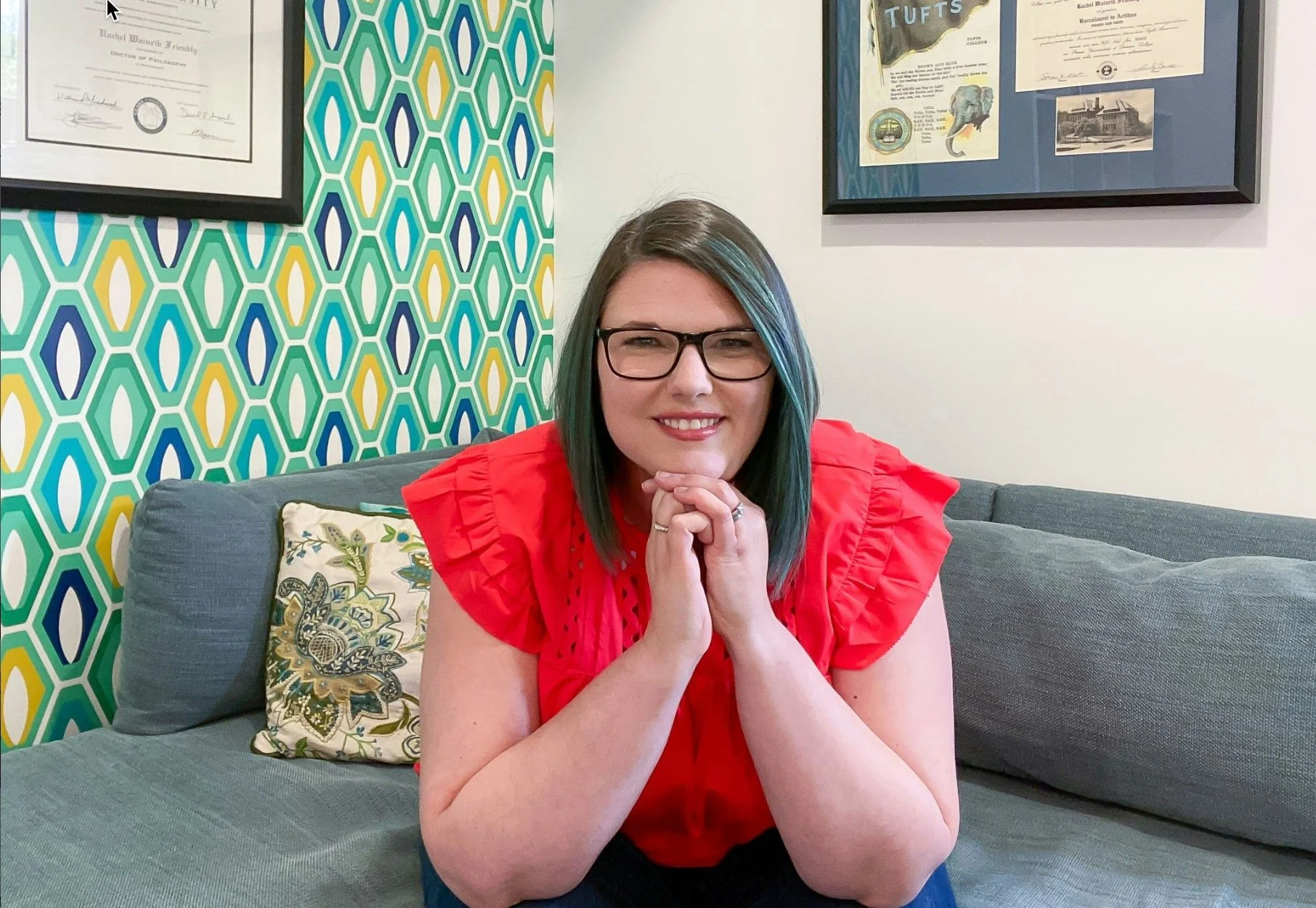
Dr. Friendly is a licensed clinical psychologist and local Therapist in Fairfax, VA specializing in helping women who struggle to prioritize their own needs and set healthy boundaries. She uses evidence-based approaches (relational therapy, feminist therapy, IFS) to help clients move from chronic stress to lasting strength. Interested in starting boundary work or exploring therapy? Learn more about Dr. Friendly’s services and schedule a consultation at today.