

IFS Therapy
Internal Family Systems
IFS Therapy: Where Self-Knowledge Becomes Self-Compassion.
You Know Yourself. So Why Does This Keep Happening?
No matter what you do, no matter how much you feel like you have grown, you keep getting drawn back into the same cycles over and over again. You have worked so hard to build a successful life, and in some ways, you know you have succeeded. But in others, you just feel like you keep getting in your own way.

The habits you know are bad for you that you just cannot seem to break.
The relationships that feel so much harder than they should.
You have tried. You keep trying. And still, here you are.
Sometimes you are not even sure who you really are underneath all of that. And that feels scary. Like you should know yourself better by now. Like you should have more self-control or something. The fact that you do not have it figured out yet feels like its own kind of failure.
You would so love to feel more connected to yourself and your life. To maybe even figure out how to love yourself. But it just all seems impossible.
You need help.
Something in You Already Knows
The fact that you are here, reading this, tells you something.
There is a part of you that has not given up. A part that still believes something different is possible, even when the rest of you is exhausted from trying.
That part is right.
Underneath the frustration and the self-doubt, there is someone who genuinely wants to feel connected, to break free from what keeps pulling you back, to love yourself and your life in a way that feels real. That longing is not weakness or foolishness. It is the truest thing about you.
I'm Rachel, and This Is the Work I Was Made to Do
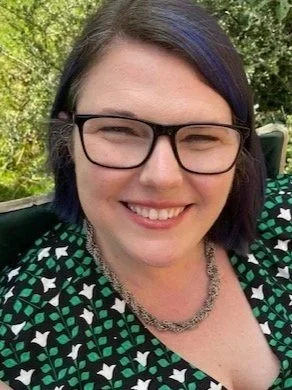
Rachel W. Friendly, PhD, IFS Level 1 Trained, IFS Institute
VA License #: 810004656 DC License #: PSY200001476 MA License #: 11340 CA License #: 27922
Member of Virginia Academy of Clinical Psychologists (VACP) and Northern VA Clinical Psychology Association (NVCP)
I'm Dr. Rachel W. Friendly, a Licensed Clinical Psychologist based out of Fairfax County, VA, and serving clients virtually all over Virginia, Washington DC, Massachusetts, and California.
I help adults who are ready to build deeper connections with themselves and others learn to develop self-compassion and self-trust and heal from old wounds.
The clients I work with through IFS therapy are generally thoughtful, self-aware people. They know their patterns. They have tried to change them. And they are tired of trying and seeing no difference.
What they have not yet had the chance to do is meet the parts of themselves that are running those patterns with real curiosity and real compassion, rather than frustration or shame.
That is exactly what Internal Family Systems, or IFS, makes possible.
I received my IFS Level 1 training through the IFS Institute, the credentialing body developed by the founder of internal family systems therapy, Richard Schwartz. The program is an extensive commitment, and involves 91 hours of live training, including didactic learning, experiential learning, and supervised practice.
What IFS Actually Is and Why It Works

IFS is an evidence-based approach built on a simple but profound idea: we are not one single, unified self. Instead, we are all made up of many parts, all with different roles and different concerns.
Some parts are protective. They developed to keep you safe, often a long time ago, in circumstances that required it.
Some parts are wounded. They are carrying pain, shame, or fear from experiences that were never fully healed. And underneath all of those parts is something IFS calls the Self: a calm, compassionate, grounded core that is always there in all of us, even when it feels completely out of reach.
In IFS therapy, we work to identify and connect with both the protective and wounded parts of your system with curiosity and compassion, so you no longer have to carry the burdens of past experiences.
IFS is a non-pathologizing approach. Nothing about you is a flaw to be fixed. Every part of you, even the ones you have spent years fighting or hiding, developed for a reason. The work is about understanding those reasons and finally giving those parts a rest from the extreme role they have been forced into. In our sessions, I might invite you to get curious about a part of you that keeps saying yes when you mean no, or a part of you that keeps you doom-scrolling on your phone when you want to be resting, or even a part of you that needs you to be perfect and criticizes you bitterly when you inevitably fall short. We'll slow down together to hear what those parts are trying to protect.
One of the things I love most about IFS is that it takes me out of the driver's seat entirely:
I am not the one doing the healing.
You are.
My clients are the ones doing the deep work of developing compassionate, connected relationships with the parts of their own system. My job is to guide them through that process and to bear witness to what unfolds. It is a powerful dynamic, and it is a genuine privilege to be part of it.
In our work together, you can expect to:
Get to know the parts of yourself that have been quietly running the show, often without your awareness
Approach those parts with curiosity rather than criticism, and begin to understand what they have been carrying
Build real compassion for parts of yourself that you have rejected, hidden, or felt ashamed of
Reconnect with parts of yourself you had forgotten were even there
Begin to heal the wounds underneath the patterns that brought you to therapy in the first place
What Becomes Possible
This is not about forcing yourself to change. It is about finally understanding the parts of yourself that were driving the cycles and giving them what they actually need. Clients who do this work report feeling more confident and centered in their daily lives. They begin to notice the patterns loosening, not because they white-knuckled their way through it, but because the parts motivating those patterns finally got to put down what they were carrying. Over time, they describe feeling calmer. More hopeful. More like themselves.
IFS is especially helpful for folks whose socialization taught them that they were too much, too needy, or too different. In my experience, my queer and trans clients (and many of my clients who were socialized female too!) have often spent their whole lives managing how they present themselves to the world. With IFS, we can get to know the parts that have been doing all that managing with genuine curiosity instead of judgment, and heal some of the wounds that make all that work feel necessary.
Maybe you have an inner critic, whose job it is to be mean to you in order to keep you in line. Or an inner distractor who takes you away from your life when things feel too overwhelming. Maybe you even have an inner explosives expert, whose job it is to blow things up if someone gets too close so they won’t find out that you’re really not worthy of their love. With IFS, you will develop loving relationships with all of these parts of yourself, learn more about what they need, and together, we will explore how to meet those needs so that they don’t have to work so hard anymore. These shifts can sometimes feel small, but they can lead to big changes in the way you engage with your world!
You Have Already Taken the First Step
If something on this page has felt familiar, if you have been nodding along or feeling that quiet recognition that this is about you, that is worth paying attention to.
That recognition is your own inner wisdom.
Reaching out is a real and meaningful step. It does not commit you to anything except a conversation. You do not have to have it all figured out before you reach out. You just have to be willing to try something new. Click below to connect today!
Recommended IFS Therapy Resources:
IFS Institute Website: https://ifs-institute.com/
Books:
Videos:
The Weekend University Summit Interview: https://www.youtube.com/watch?v=DTUdMSAH6M8
Therapy in a Nutshell with Emma McAdam (Sample Mini-IFS Session): https://www.youtube.com/watch?v=QvM2a7-4pvY
Podcasts: https://ifs-institute.com/resources/podcasts-and-teleconferences

Frequently Asked Questions About IFS Therapy
-
IFS stands for Internal Family Systems. It is an evidence-based approach developed by Dr. Richard Schwartz that is built on the idea that we are each made up of many different parts, rather than one unified being. Some of those parts are protective, working hard to keep us safe. Others are wounded, carrying pain or shame from past experiences. IFS online therapy helps you get to know those parts with curiosity and compassion, so they no longer have to run your life from the background.
The goal is not to eliminate any part of you. All parts are valuable and important, and all are trying to help in their own way, even that ones that feel like obstacles or symptoms. The goal is rather to help each part finally feel seen, understood, and unburdened.
IFS is not like traditional “talk therapy.” It’s more experiential (feeling into what is going on inside of you) and driven entirely by your needs in the moment. Most clients find with IFS, they feel less like they are being analyzed and more like they are being understood.
I completed Level 1 IFS training through the IFS Institute, which means I'm trained in the model's core framework. I integrate it with other evidence-based approaches depending on what fits you.
-
Many therapy approaches (CBT, cognitive therapy, behavioral approaches) focus on changing thoughts or behaviors directly, or, like many psychodynamic approaches, they may focus on things that happened in the past but without doing anything with those memories, so some clients struggle to experience change.
IFS goes a layer deeper. Instead of asking you to think differently or push through unhelpful patterns by sheer effort, IFS helps you understand the parts of yourself that are driving those patterns in the first place. Instead of revisiting old wounds and then feeling powerless to change the impact of those wounds on your life, IFS helps you to process the pain in real time and release the burdens those parts have carried. When a part feels truly understood and no longer has to carry an old burden, change often happens more naturally and more lastingly.
IFS is a non-pathologizing model, meaning nothing about you is treated as a flaw or a disorder. Every part of you developed for a reason, and IFS honors that. Importantly, IFS also goes at the speed of your system. You will never be pushed, or rushed, and you will never be judged for moving too slowly. Healing happens when every part of the system feels heard and respected, and only you know what the pace needs to be to do that,
-
No. IFS is not a diagnosis-specific approach. It is well suited for anyone who feels stuck in patterns they cannot seem to break, who struggles with self-criticism or shame, who wants to build a more compassionate relationship with themselves, or who is ready to do deeper work on old wounds. Many clients who seek out IFS therapy describe themselves as self-aware people who have tried other approaches and are ready for something that goes a little further.
-
IFS therapy can be helpful for a wide range of experiences, including relationship difficulties, low self-esteem, people-pleasing, perfectionism, grief, trauma, and the sense of being stuck in cycles that feel impossible to break. Because IFS therapy works at the level of the parts carrying these experiences, rather than the symptoms themselves, clients often find that it addresses multiple areas of their life at once.
-
Yes. IFS therapy works very well in a virtual format. This is because the work is driven entirely by you, what feels okay to your system, and what your needs are during a given session, and much of the work happens internally. Because of the way IFS works, there is often a lot less talking than in traditional talk therapy modalities. My job is to guide you through the steps of the process and to bear witness to anything you choose to share. Because of that, it is not necessary for us to be in the same physical space for this to work.
IFS online sessions take place over a secure video platform, doxy.me, allowing you to do this meaningful work from the comfort and privacy of your own space. Many clients actually find that being in a familiar environment helps them feel more at ease and more able to access the deeper work. I currently offers IFS online therapy to clients throughout Virginia, Washington DC, Massachusetts, and California.
-
This varies from person to person and depends on what you are working through and what your goals are. Some clients notice meaningful shifts within a few months. Others choose to continue the work over a longer period as they go deeper into their system. We will work together to understand your goals and give you a sense of what the process might look like for you. The pace of IFS therapy is always guided by you and what feels right for your healing.
-
Yes. IFS can be a wonderful entry point into therapy, especially if you are someone who tends to be curious and self-reflective. I work to make the process feel accessible and grounding, not overwhelming. You do not need to know anything about IFS beforehand. I will guide you through the model in a way that makes sense for you and where you are starting from.
-
That is more common than you might think, and it does not mean therapy cannot help you. It may mean that a different approach, or a different therapeutic relationship, is what you need. In my decade and a half of practice, clients who have come to me after a bad experience with previous therapy usually did not click with the therapist, or did not resonate with the therapy modality, or both.
IFS therapy goes deeper than many traditional approaches, and the relational quality of the work matters enormously. My clients say they feel genuinely seen and valued when working with me, and many clients report this feels different from therapy experiences they have had before.
-
That uncertainty is completely normal and worth honoring. There may be doubting parts of you, cynical parts of you, or just scared parts of you that wonder whether this is even a good idea! The best way to find out is to have a conversation. Reaching out does not commit you to anything. It is simply a chance to ask your questions, share a little about what you are looking for, and get a feel for whether this feels right. I welcome those conversations and will be honest with you about whether I think I can help.
-
Absolutely. I have extensive experience and a deep commitment to working with queer, transgender, and gender expansive folks, and I identify as a queer therapist myself. I specifically work with transgender, nonbinary, gender expansive, and queer clients, and a significant part of my practice is built around gender identity and LGBTQ+ experience.
My practice is an affirming space where all of your identities are not just accepted but genuinely welcomed. My paperwork is written with all genders and sexual orientations in mind (chosen name, pronouns, etc), and I continually seek out training in queer and trans mental health to make sure I am providing the best possible care in session.
Many LGBTQ+ clients actually find that IFS therapy is particularly meaningful because it offers a space to explore all parts of themselves, including the parts that have had to stay hidden or protected for a long time.
-
Once you click through to the Contact Me page and submit the form, or call me at (617)675-1330, the next step is for us to schedule a brief (~20-minute), free phone consultation to see whether we seem to be a good fit. Remember, fit is one of the most important predictors of success in therapy! You will generally hear back from me within 1-2 business days to schedule the call (but often more quickly than that).
If, after the call, we decide to move forward together, we will then schedule a first therapy appointment. You will complete paperwork prior to the appointment letting me know a bit more about you. We will then meet and we will talk some about your life and your goals. Together, we will begin to identify some of the parts of yourself that you might be interested in getting to know better. And then we begin!

Confidentiality
All sessions are completely confidential, with some very specific limits around protecting your and others’ safety and court orders that we will discuss in our first session.
I take your privacy extremely seriously — including with family members or employers.
Therapy is a space that gets to be just for you.
In-person and remote options
My office is conveniently located in Fairfax County, VA. Can’t make it into the office? No worries – I’ve got you covered with teletherapy anywhere in Virginia, Washington DC, Massachusetts, or California.
IFS Therapy, like all therapy, is not a substitute for emergency services. In the event of an immediate mental health crisis, please reach out to your local mobile crisis unit, text the Crisis Help Line at 9-8-8, or contact your nearest emergency department.